
Most Connecticut homeowners ask the same question every few years: how do I know if it's time to repaint? Paint doesn't fail overnight — the signs sneak up gradually. By the time you notice the obvious damage, you've often missed the cheaper window to fix it. Here are the 5 clearest signs your Connecticut house is overdue for a paint job.
Peeling, Cracking, or Chipping Paint
This is the most obvious sign and the one that needs attention fastest. Peeling paint on the exterior means moisture has gotten under the surface, paint adhesion has failed, or both. Once paint starts peeling, it spreads. Wind, rain, and freeze-thaw cycles pull more sections loose, exposing bare wood underneath.
Bare wood absorbs water, rots, and creates a much bigger repair than a simple repaint. Cracking and chipping work the same way. If you see any of these, get an estimate before another season of weather makes it worse.
 Peeling paint is the clearest sign — act before it spreads
Faded or Chalky Paint Color
Run your hand across the exterior siding. If your fingers come back with a chalky white residue, the paint is breaking down. UV radiation from the sun degrades exterior paint over time, especially on sun-facing walls. The binders in the paint break down, the surface gets chalky, and color fades.
Caulking Is Cracked or Missing
Caulk seals the gaps where two surfaces meet — around windows and doors, between trim boards, where siding meets corners. Over time, caulk dries out, cracks, shrinks, and pulls away. Once that happens, water has a clear path behind the siding and into the wall structure.
 Cracked caulk is an easy-to-miss sign that can lead to water damage
Stains, Marks, or Discoloration Inside
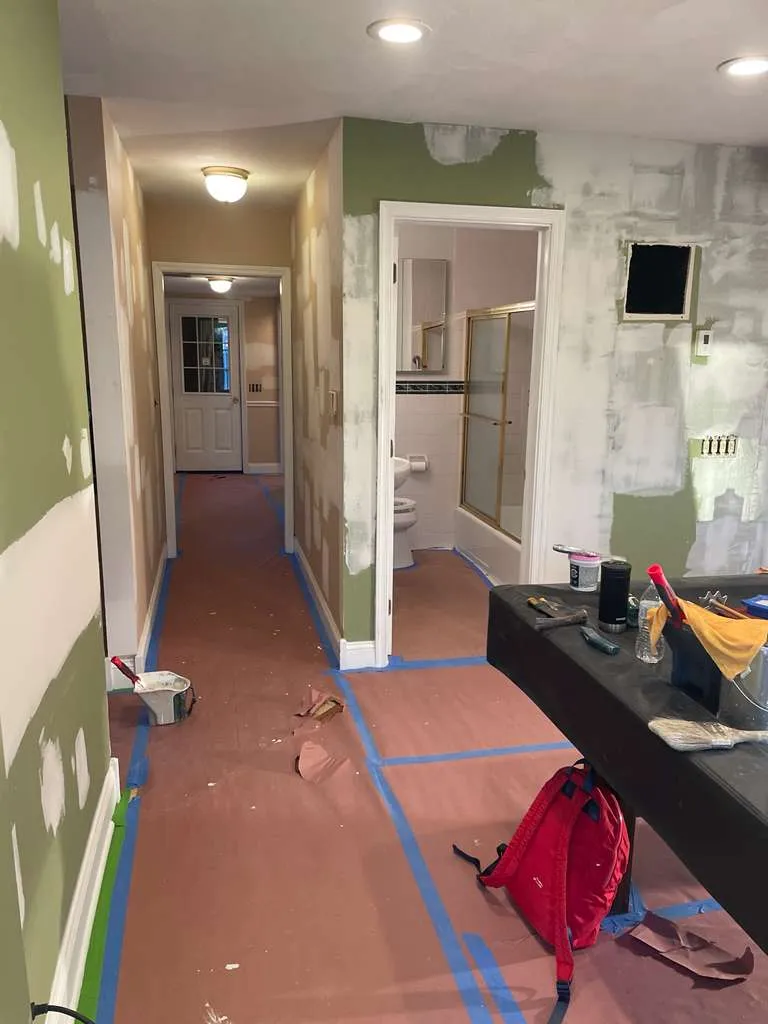
On the interior, pay attention to walls in high-traffic areas. Hallways, kitchens, kids' bedrooms, and stairwells take the most wear. Scuffs from furniture, fingerprints around switches, food splatter near stoves, and crayon marks all build up over the years. At some point, washing the walls stops working.
Discoloration around vents, ceilings, or above radiators is another tell. Heating systems push dust into the air, and that dust settles on walls and ceilings, gradually darkening them.
You've Spotted Two or More of These
Any one of these signs is worth watching. Two or more is a clear signal to call for a free estimate. Paint problems compound each other — peeling leads to rot, caulk failure leads to water damage, and faded paint means the surface is unprotected going into another Connecticut winter.
Frequently Asked Questions
Exterior paint typically lasts 8 to 12 years with quality paint and proper prep. Interior paint lasts 5 to 7 years in high-traffic rooms. Connecticut weather can shorten exterior life slightly compared to milder climates.
Peeling paint exposes bare wood to moisture, which leads to rot. In older homes (pre-1978), peeling paint can also contain lead, which is a health risk. Either way, peeling paint should be addressed quickly.
No. Painting over peeling paint just traps the problem underneath. The new coat peels with the old one within a year. Proper prep means scraping all loose paint, sanding, priming bare spots, then painting.
Yes. A fresh exterior paint job typically returns 50 to 75 percent of its cost in resale value, sometimes more on homes with strong curb appeal. Interior paint also helps homes show better and sell faster.
If your Connecticut home was built before 1978, lead paint is a real possibility. Inexpensive lead test kits are available at hardware stores, or a professional painter can test before starting the job.